Cite a Report in APA Format
Learn how to cite a report in APA format. You can build the citation yourself, step by step, or use a citation generator such as Zotero and then check the details.
- Manual Citation – Build a report citation step by step, with screenshots.
- Citation Generator – See how Zotero creates APA-formatted report citations.
- Common Mistakes –
Check typical report citation errors and how to fix them.
- Quiz – Test your understanding of report citations.
- FAQs – Find quick answers to common questions.
Have a question or suggestion? Add it in the Comments section below.
How to Cite a Report in APA Format Yourself
A report reference list entry has four main parts: Author, Date, Title, and Source.
Start with the author. Then add the date, title, and source details.
Author
The author is the first element in an APA-formatted reference list entry.
It also appears in both parenthetical and narrative in-text citations.
The author may be:
- one or more people (individual authors), or
- a group author, such as an organization, government department, company, statutory authority, or association.
Select the author type that applies to your report.
One Individual Author (APA Format)
Quick Examples
Parenthetical in-text citation
The report examines risks linked to crisis stability in space (Tretter, 2025).
Narrative in-text citation
Tretter (2025) examines risks linked to crisis stability in space.
Reference list entry
Tretter, C. (2025, January 21). Exploring factors for U.S.-Russia crisis stability in space. RAND Corporation. https://doi.org/10.7249/RRA2313-3
How to Cite One Individual Author
Use the year in the parenthetical or narrative in-text citation.
The full date appears only in the reference list entry.
Use the report’s publication date or release date if available.
If there is no date, write "n.d." (which means no date).
If the report is online, do not use the website’s general copyright date.
Parenthetical In-text Citation
Format the parenthetical in-text citation as follows:
- Write the author's last name and the year in parentheses.
- Separate the last name and year with a comma and a space.
See Figure A1-1 for an example of a parenthetical in-text citation.
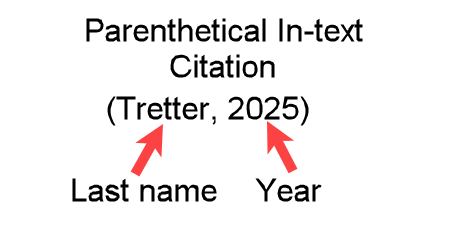 Figure A1-1: Parenthetical In-text Citation
Narrative In-text Citation
Format the narrative in-text citation as follows:
- Write the author’s last name in the sentence.
- Write the year in parentheses straight after the name.
See Figure A1-2 for an example of a narrative in-text citation.
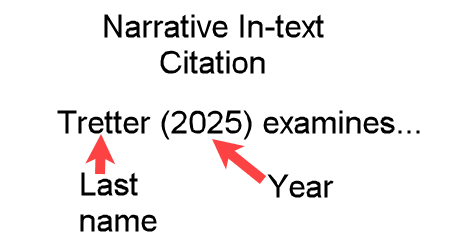 Figure A1-2: Narrative In-text Citation
Reference List Entry
Format the author section of the reference list entry as follows:
- Write the last name, followed by a comma and a space.
- Write the author's initial(s), followed by a period and space.
See Figure A1-3 for an example of an author with one initial.
See Figure A1-4 for an example of an author with two initials.
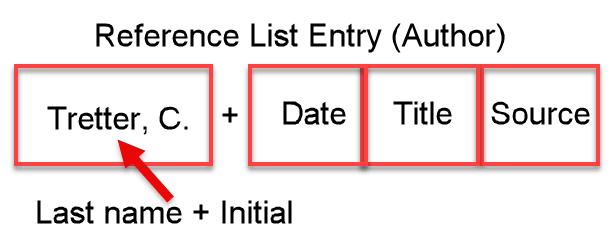 Figure A1-3: Author With One Initial
Tretter, C. (2025, January 21). Exploring factors for U.S.-Russia crisis stability in space. RAND Corporation. https://doi.org/10.7249/RRA2313-3
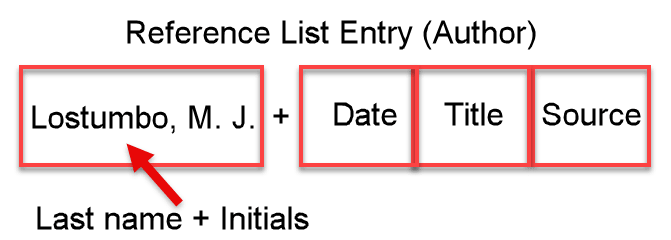 Figure A1-4: Author With Two Initials
Lostumbo, M. J. (2024). Love letters tied to bricks: Pitfalls of presentations as professional communication. RAND Corporation. https://doi.org/10.7249/RRA2869-1
Two Individual Authors (APA Format)
Quick Examples
Parenthetical in-text citation
The report examines an online communication campaign (Helmus & Klein, 2018).
Narrative in-text citation
Helmus and Klein (2018) examine an online communication campaign.
Reference list entry
Helmus, T. C., & Klein, K. (2018, December 10). Assessing outcomes of online campaigns countering violent extremism: A case study of the Redirect Method. RAND Corporation. https://doi.org/10.7249/RR2813
How to Cite Two Individual Authors
Include both author names and use the year in the parenthetical or narrative in-text citation.
The full date appears only in the reference list entry.
Use the report’s publication date (or release date) if available.
If there is no date, write "n.d." (which means no date).
If the report is online, do not use the website’s general copyright date.
Parenthetical In-text Citation
Format the parenthetical in-text citation as follows:
- Write both authors’ last names and the year in parentheses.
- Separate the authors’ last names with a space, an ampersand (&), and a space.
- Separate the second author’s last name and the year with a comma and a space.
See Figure A2-1 for an example of a parenthetical in-text citation with two authors.
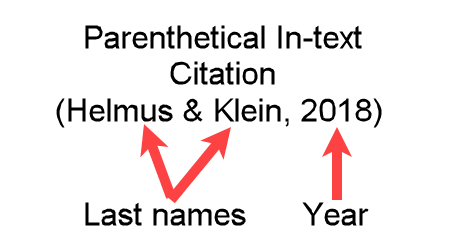 Figure A2-1: Parenthetical In-text Citation for Two Authors
Narrative In-text Citation
Format the narrative in-text citation as follows:
- Write both authors’ last names as part of the sentence.
- Join the authors’ last names with the word “and”.
- Write the year in parentheses straight after the second author’s last name.
See Figure A2-2 for an example of a narrative in-text citation with two authors.
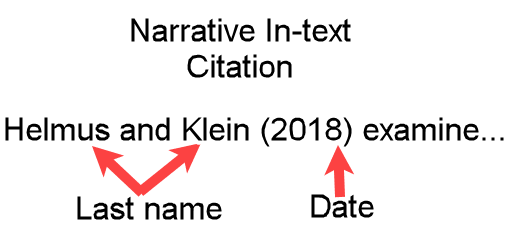 Figure A2-2: Narrative In-text Citation for Two Authors
Reference List Entry
Format the author section of the reference list entry as follows:
- Write each author’s last name first, followed by initials.
- Use a comma after the first author’s initials.
- Add an ampersand (&) before the second author’s name.
- Use a period after the second author’s initials.
See Figure A2-3 for an example of a reference list entry for two authors.
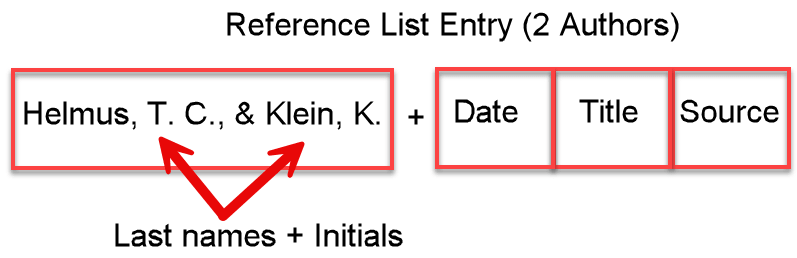 Figure A2-3: Reference List Entry for Two Authors
Three to Twenty Individual Authors (APA Format)
Quick Examples
Parenthetical in-text citation
The report discusses public views about ways to improve democracy (Silver et al., 2024).
Narrative in-text citation
Silver et al. (2024) discuss public views about ways to improve democracy.
Reference list entry
Silver, L., Fagan, M., Huang, C., & Clancy, L. (2024, March 13). What can improve democracy? Pew Research Center. https://www.pewresearch.org/global/wp-content/uploads/sites/2/2024/03/2024.03.13_democracy-open-end_report.pdf
How to Cite Three to Twenty Individual Authors
Use this option when the report names three to twenty people as authors.
In the parenthetical or narrative in-text citation, write only the first author’s last name, followed by et al. and the year.
In the reference list entry, include all authors’ names.
Use the report’s publication date or release date if available. If there is no date, write n.d., which means no date.
If the report is online, do not use the website’s general copyright date.
Parenthetical In-text Citation
Format the parenthetical in-text citation as follows:
- Write the first author’s last name and et al. inside parentheses.
- Add the year after et al.
- Separate et al. and the year with a comma and a space.
See Figure A3-1 for an example of a parenthetical in-text citation for four authors.
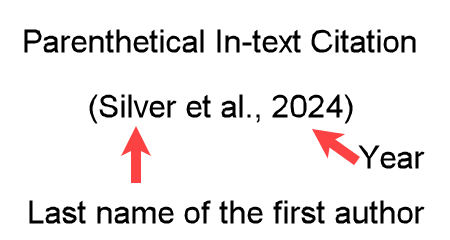 Figure A3-1: Parenthetical In-text Citation for Four Authors
Narrative In-text Citation
Format the narrative in-text citation as follows:
- Write the first author’s last name and et al. as part of the sentence.
- Write the year in parentheses straight after et al.
See Figure A3-2 for an example of a narrative in-text citation for four authors.
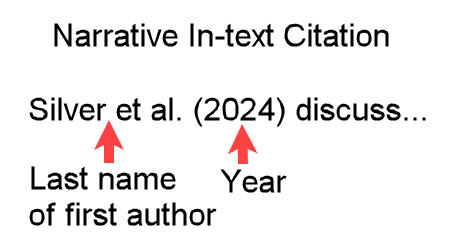 Figure A3-2: Narrative In-text Citation for Four Authors
Reference List Entry
Format the author section of the reference list entry as follows:
- Write each author’s last name first, followed by initials.
Include all authors’ names when the report has three to twenty authors. - Separate authors with commas.
- Add an ampersand (&) before the final author’s name.
- End the author section with a period.
See Figure A3-3 for an example of a reference list entry for four authors.
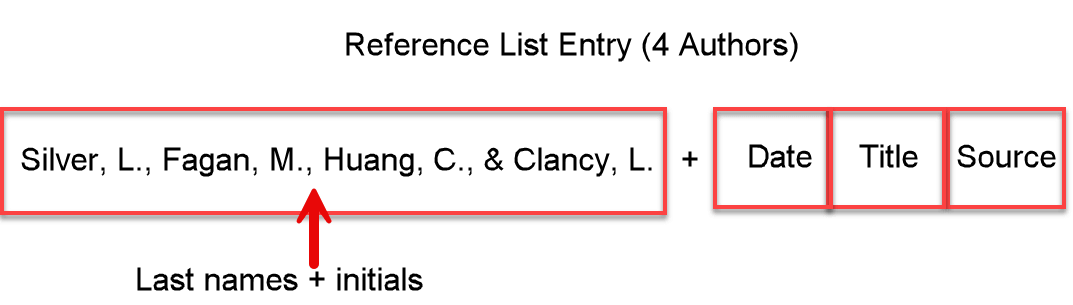 Figure A3-3: Reference List Entry for Four Authors
Note. Include all authors’ names when the report has three to twenty authors.
If a report has more than 20 authors, list the first 19 authors, add an ellipsis, and then add the final author.
Group Author (APA Format)
Quick Examples
Parenthetical in-text citation
The report summarizes global health indicators across many countries (World Health Organization, 2024).
Narrative in-text citation
World Health Organization (2024) reports on global health trends and indicators.
Reference list entry
World Health Organization. (2024). World health statistics 2024. https://www.who.int/publications/b/74273
Use this format when the report names a group as the author, such as an organization, government department, company, statutory authority, or association.
In the parenthetical or narrative in-text citation, use the group author’s name and the year.
In the reference list entry, write the group name as the author.
Use the report’s publication date or release date if available. If there is no date, write n.d., which means no date.
If the report is online, do not use the website’s general copyright date.
Parenthetical In-text Citation
Format the parenthetical in-text citation as follows:
- Write the group's name and the year in parentheses.
- Separate the group’s name and the year with a comma and a space.
See Figure G-1 for an example of a parenthetical in-text citation for a group.
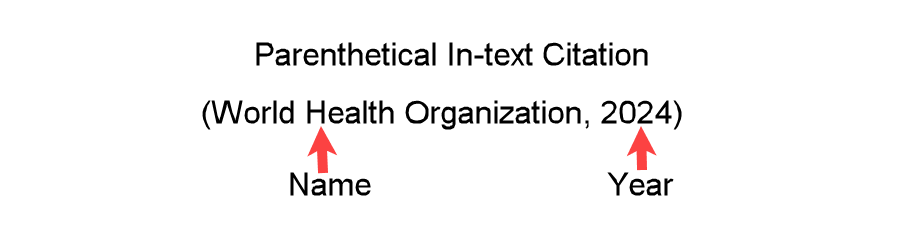 Figure G-1: Parenthetical In-text Citation (Group Author)
Narrative In-text Citation
Format the narrative in-text citation as follows:
-
Write the group’s name as part of the sentence.
- Write the year in parentheses straight after the group’s name.
See Figure G-2 for an example of a narrative in-text citation for a group.
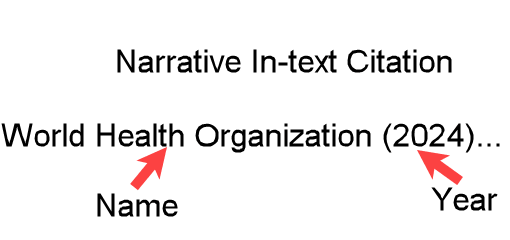 Figure G-2: Narrative In-text Citation (Group Author)
Reference List Entry
Format the author section of the reference list entry as follows:
- Write the group's name in title case.
- Add a period and space.
See Figure G-3 for an example of a reference list entry for a group.
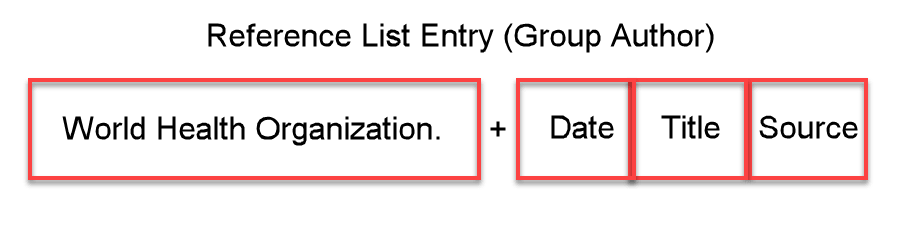 Figure G-3: Reference List Entry for a Group Author
Date
The date is the second element in an APA reference list entry.
In parenthetical and narrative in-text citations, include only the year, even if the reference list entry gives a month, day, or season.
In the reference list entry, use the report’s publication date or release date where possible.
If the report is online, do not use the website’s general copyright date unless it clearly applies to the report itself.
If no date is shown, write n.d., which means no date.
Year Only (APA Format)
Quick Examples
Parenthetical in-text citation
The report summarizes global health indicators across many countries (World Health Organization, 2024).
Narrative in-text citation
World Health Organization (2024) reports on global health trends and indicators.
Reference list entry
World Health Organization. (2024). World health statistics 2024. https://www.who.int/publications/b/74273
Include a parenthetical or narrative in-text citation.
Parenthetical In-text Citation
Format the parenthetical in-text citation as follows:
- Write the year after the group's name inside the parentheses.
- Separate group's name and the year with a comma and a space.
See Figure Y-1 for an example of a parenthetical in-text citation.
Figure Y-1: Parenthetical In-text Citation (Year Only)Narrative In-text Citation
Format the narrative in-text citation as follows:
- Write the year in parentheses straight after the group's name as part of the sentence.
See Figure Y-2 for an example of a narrative in-text citation.
 Figure Y-2: Narrative In-text Citation (Year Only)
Reference List Entry
Format the date section of the reference as follows:
- Write the year in parentheses.
- Add a period and space after the closing parenthesis.
See Figure Y-3 for an example of how the date appears in a reference list entry.
 Figure Y-3: Reference List Entry for a Report with a Year Only Date
Year and Month (APA Format)
Quick Examples
Parenthetical in-text citation
The report discusses a decrease in school student numbers after the COVID-19 pandemic (Goulas & Pula, 2024).
Narrative in-text citation
Goulas and Pula (2024) examined why some schools lost students after COVID-19.
Reference list entry
Goulas, S., & Pula, I. (2024, May). Why did schools lose students after COVID-19? Brookings Institution. https://www.brookings.edu/wp-content/uploads/2024/05/20240516_THP_InformedParents_Paper.pdf
Parenthetical In-text Citation
Format the parenthetical in-text citation as follows:
- Write the year after the cited author name or names inside the parentheses.
- Separate the cited author name or names, and the year with a comma and a space.
Note: The month is not shown in the in-text citation.
See Figure YM-1 for an example of a parenthetical in-text citation.
 Figure YM-1: Parenthetical In-text Citation Including the Year Only
Narrative In-text Citation
Format the narrative in-text citation as follows:
- Write the year in parentheses straight after the cited author name or names.
Note: The month is not shown in the in-text citation.
See Figure YM-2 for an example of a narrative in-text citation.
 Figure YM-2: Narrative In-text Citation Including the Year Only
Reference List Entry
Format the date section of the reference as follows:
- Write the year and month inside parentheses.
- Separate them with a comma and a space.
- Add a period after the closing parenthesis.
Note: Write the month in full. Do not abbreviate it.
See Figure YM-3 for an example of how the date appears in a reference list entry.
 Figure YM-3: Reference List Entry for a Report with a Year and Month Date
Year, Month, and Day
Quick Examples
Parenthetical in-text citation
The report describes the Bank’s activities and finances for the reporting year (Bank of England, 2024).
Narrative in-text citation
The Bank of England (2024) describes its activities and finances for the reporting year.
Reference list entry
Bank of England. (2024, July 30). Bank of England annual report and accounts 2024. https://www.bankofengland.co.uk/annual-report/2024
Include a parenthetical or narrative in-text citation.
Parenthetical In-text Citation
Format the parenthetical in-text citation as follows:
- Write the year after the cited author name or names inside the parentheses.
- Separate the cited author name or names and the year with a comma and a space.
Note: The month and day are not shown in the in-text citation.
See Figure YMD-1 for an example of a parenthetical in-text citation.
 Figure YMD-1: Parenthetical In-text Citation Including Year Only
Narrative In-text Citation
Format the narrative in-text citation as follows:
- Write the year in parentheses straight after the cited author name or names.
Note: The month and day are not shown in the in-text citation.
See Figure YMD-2 for an example of a narrative in-text citation.
 Figure YMD-2: Narrative In-text Citation Including Year Only
Reference List Entry
Format the date section of the reference list entry as follows:
- Write the year, month, and day inside parentheses.
- Separate the year and month with a comma and a space.
- Write the day after the month.
- Add a period after the closing parenthesis.
Write the month in full. Do not abbreviate it.
See Figure YMD-3 for an example of how the date appears in a reference list entry.
 Figure YMD-3: Reference List Entry for a Report (Year, Month, and Day)
Year and Season
Quick Examples
Parenthetical in-text citation
The report discusses economic conditions in Ireland during 2024 (McQuinn et al., 2024).
Narrative in-text citation
McQuinn et al. (2024) discuss economic conditions in Ireland during 2024.
Reference list entry
McQuinn, K., O’Toole, C., & Hauser, L. (2024, Spring). Quarterly economic commentary: Spring 2024. Economic and Social Research Institute. https://www.esri.ie/system/files/publications/QEC2024SPR.pdf
Include a parenthetical or narrative in-text citation.
Parenthetical In-text Citation
Format the parenthetical in-text citation as follows:
- Write the year after the cited author name or names inside the parentheses.
- Separate the cited author name or names and the year with a comma and a space.
Note: The season is not shown in the in-text citation.
See Figure YS-1 for an example of a parenthetical in-text citation.
 Figure YS-1: Parenthetical In-text Citation Including Year
Narrative In-text Citation
Format the narrative in-text citation as follows:
- Write the year in parentheses straight after the cited author name or names.
Note: The season is not shown in the in-text citation.
See Figure YS-2 for an example of a narrative in-text citation.
 Figure YS-2: Narrative In-text Citation Including Year
Reference List Entry
Format the date section of the reference as follows:
- Write the year and season inside parentheses.
- Separate them with a comma and a space.
- Add a period after the closing parenthesis.
See Figure YS-3 for an example of how the date appears in a reference list entry.
 Figure YS-3: Reference List Entry for a Report (Year and Season)
Title
The title is the third element in an APA reference list entry. It shows what the report is called.
In the reference list entry, write the report title in italics and sentence case.
In sentence case, capitalize the first word of the title, the first word after a colon, em dash, or end punctuation, and any proper nouns. Also capitalize a noun followed by a numeral or letter such as Results of Experiment 15.
Title Only
Reference List Entry
Format the title section of the reference list entry as follows:
- Write the report title in sentence case.
- Italicize the title.
- Add a period after the title.
See Figure T-1 for an example.
 Figure T-1: Report Title in a Reference List Entry
The full citation is:
Al-Shakeri, H. (2024, October). Iraq’s young agents of change. Chatham House. https://tinyurl.com/4xkpevrj
Title and Subtitle
Reference List Entry
Format the title section of the reference list entry as follows:
- Write the report title in sentence case.
- Add a colon and a space before the subtitle.
- Write the subtitle in sentence case.
- Italicize the title and subtitle.
- Add a period after the subtitle.
See Figure TS-1 for an example.
 Figure TS-1: Report Title and Subtitle in an APA-formatted Reference List Entry
The full citation is:
International Labour Organization. (2024). Heat at work: Implications for safety and health. https://www.ilo.org/publications/heat-work-implications-safety-and-health
Source
The source is the fourth element in an APA reference list entry. It tells the reader where the report can be found.
For an online report, the source may include:
- the publisher or organization responsible for the report
- a URL, or a DOI if one is available
If the author and publisher are the same, do not repeat the publisher name in the source section.
With the Organization Name
Include the organization name only if it differs from the author.
Reference List Entry
Format the source section of the reference list entry as follows:
- Write the publisher or organization name.
- Add a period.
- Write the DOI or URL.
See Figure S-1 for an example.
 Figure S-1: Report Source with a Publisher in a Reference List Entry
The full citation is:
Al-Shakeri, H. (2024, October). Iraq’s young agents of change. Chatham House. https://tinyurl.com/4xkpevrj
Without the Publisher Name
Do not include the name if the organization is the same as the author.
Reference List Entry
Format the source section of the reference list entry as follows:
- Write the DOI or URL.
See Figure S-2 for an example.
 Figure S-2: URL Only in a Reference List Entry
The full citation is:
World Health Organization. (2024). World health statistics 2024. https://www.who.int/publications/b/74273
Zotero - a Free Citation Generator
Zotero is useful when you need to cite a report in APA format quickly and accurately.
With Zotero, you can:
- Enter the report's citation information into your Zotero library.
- Add in-text citations straight into your Word document.
- Create an APA-formatted reference list automatically in your Word document.
Learn how to use Zotero to easily cite a report in APA format.
Common Report Citation Errors
Here are common errors to watch for when you cite a report in APA format, and how to fix them:
- Using title case instead of sentence case for the report title
Incorrect: World Health Statistics 2024
Correct: World health statistics 2024 - Not italicizing the report title
Incorrect: World health statistics 2024
Correct: World health statistics 2024 -
Leaving out the publisher when different from the author
Incorrect: Al-Shakeri, H. (2024, October). Iraq’s young agents of change. https://tinyurl.com/4xkpevrj
Correct: Al-Shakeri, H. (2024, October). Iraq’s young agents of change. Chatham House. https://tinyurl.com/4xkpevrj -
Repeating the publisher when it is the same as the author
Incorrect: Microsoft. (2024). Microsoft annual report 2024. Microsoft. https://tinyurl.com/r3jfsszh
Correct: Microsoft. (2024). Microsoft annual report 2024. https://tinyurl.com/r3jfsszh - Not capitalizing a proper noun in a title
Incorrect: World Bank. (2024). World bank annual report 2024. https://tinyurl.com/y5kuxrbd
Correct: World Bank. (2024). World Bank annual report 2024. https://tinyurl.com/y5kuxrbd - Leaving out known date information
Incorrect: World Bank. (2024). World Bank annual report 2024. https://tinyurl.com/y5kuxrbd
Correct: World Bank. (2024, October 25). World Bank annual report 2024. https://tinyurl.com/y5kuxrbd -
Formatting the date incorrectly
Incorrect: World Bank. (October 25, 2024). World Bank annual report 2024. https://tinyurl.com/y5kuxrbd
Correct: World Bank. (2024, October 25). World Bank annual report 2024. https://tinyurl.com/y5kuxrbd - Adding a period after the URL or DOI
Incorrect: Yu, J. (2024, July). China “under siege”: How the US’s hardening China policy is seen in Beijing. Chatham House. https://doi.org/10.55317/9781784136192.
Correct: Yu, J. (2024, July). China “under siege”: How the US’s hardening China policy is seen in Beijing. Chatham House. https://doi.org/10.55317/9781784136192 -
Missing the period after the publisher name
Incorrect: Al-Shakeri, H. (2024, October). Iraq’s young agents of change. Chatham House https://tinyurl.com/4xkpevrj
Correct: Al-Shakeri, H. (2024, October). Iraq’s young agents of change. Chatham House. https://tinyurl.com/4xkpevrj -
Using initials in a parenthetical in-text citation
Incorrect: (Yu, J., 2024)
Correct: (Yu, 2024) - Using "&" instead of "and" in a narrative in-text citation
Incorrect: As Goulas & Pula (2024) note…
Correct: As Goulas and Pula (2024) note… -
Writing all author names for three or more authors in an in-text citation
Incorrect: (McQuinn, O’Toole, & Hauser, 2024)
Correct: (McQuinn et al., 2024)
Incorrect: As McQuinn, O’Toole, and Hauser (2024) noted…
Correct: As McQuinn et al. (2024) noted…
Note: APA 7 uses et al. for three or more authors in parenthetical and narrative in-text citations. APA 6 used different rules. -
Leaving out initials in the reference list entry
Incorrect: McQuinn, O’Toole, & Hauser.
Correct: McQuinn, K., O’Toole, C., & Hauser, L. - Missing matching citations:
In an APA paper, every parenthetical in-text citation or narrative in-text citation should have a matching reference list entry. Every reference list entry should also match at least one parenthetical in-text citation or narrative in-text citation in the paper. -
Using the website copyright date Instead of the report date
Incorrect:
World Health Organization. (2026). World health statistics 2024. https://www.who.int/publications/b/74273
Note: The webpage has a copyright date of 2026
Correct:
World Health Organization. (2024). World health statistics 2024. https://www.who.int/publications/b/74273
Quiz (15 Questions)
The quiz below helps you practise how to cite a report in APA format by checking your understanding of dates, authors, titles, and reference formatting.
Summary
You can cite a report in APA format in two main ways:
-
Create the citation yourself.
This helps you understand the APA 7th edition formatting rules. You enter the author, date, title of the report, publisher or organization if different from the author, and the URL or DOI. This is a good way to learn how APA formatting works. -
Use a citation generator such as Zotero.
Zotero can collect your source details and create the reference automatically. It is fast and useful for large assignments. However, you still need to check the author, date, title, and source because citation tools are not perfect.
Both methods work well. However, learning how to cite a report in APA format yourself gives you more confidence when you later use automated tools.
Frequently Asked Questions
What date do I use when I cite a report in APA format?
What date do I use when I cite a report in APA format?
Use the report’s publication date or release date. If the report gives a full date, include the year, month, and day in the reference list entry. In the parenthetical in-text citation or narrative in-text citation, use only the year.
Do not use the date you accessed the report or the general copyright date at the bottom of the website.
Where do I find the correct date for a report?
Where do I find the correct date for a report?
Look near the title, on the report cover, on the copyright page, or near the download link. Some reports show the date on the webpage as well as inside the PDF. If the dates differ, use the date that clearly belongs to the report itself.
What if the report has no author?
What if the report has no author?
If no personal author is named, check whether an organization, government department, company, or association is responsible for the report. If so, use that group as the author.
If no personal author or group author is shown, move the report title to the author position.
What do I italicize when I cite a report in APA format?
What do I italicize when I cite a report in APA format?
Italicize the report title in the reference list entry. Do not italicize the title in the parenthetical in-text citation or narrative in-text citation.
Comments
Do you have a question about how to cite a report in APA format?
Do you have a helpful tip or example to share?
Use the form below. I’d love to hear from you.